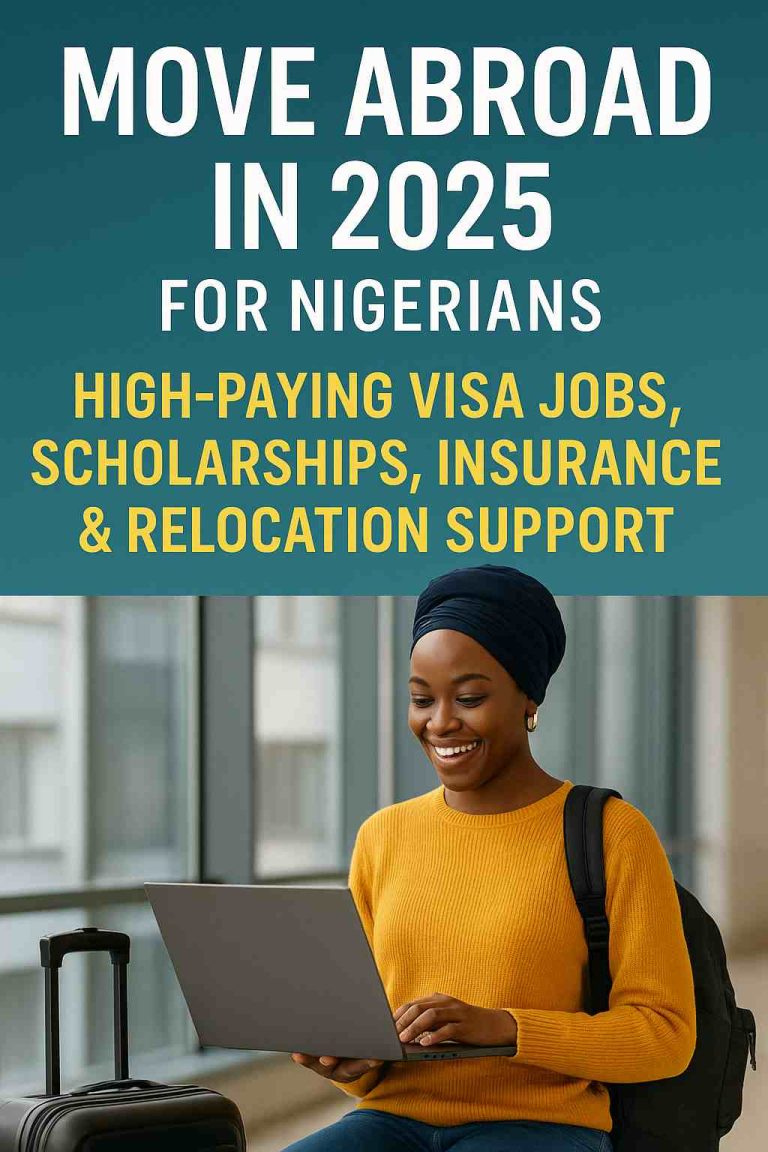
Get Paid €2,800/Month in Germany – Unskilled Jobs with Visa & Free Housing
Introduction – Why Germany Is Paying Africans €2,800/Month for Unskilled Work
Germany is facing one of the most serious labor shortages in Europe, and it’s opening its doors wider than ever to workers from Africa—especially Nigerians seeking legal employment abroad. What makes this opportunity truly life-changing is that you don’t need a university degree, years of corporate experience, or an English proficiency test like IELTS. Germany is now offering legal unskilled job placements that come with full work visas, free housing, health insurance, and average monthly salaries of up to €2,800—making it one of the most accessible and rewarding options for African job seekers in 2025.
The urgent need for workers in sectors like logistics, construction, elderly care, sanitation, and food processing has pushed the German government and private companies to recruit directly from abroad. For Nigerians, this is a rare chance to earn high-income wages in a stable country, with legal documentation and full support from the employer. Even better, these roles often come with free accommodation, removing the stress of renting in foreign cities.
With rising inflation, currency instability, and limited local job prospects, Nigerians are now actively seeking international jobs that pay in euros and offer career growth. Germany stands out not just for its pay but also for its legal clarity, worker protection laws, and potential for long-term residency. You could be earning more than ₦3 million monthly in Germany—legally and without needing a degree.
For anyone serious about financial growth, career exposure, and international experience, Germany’s unskilled job market is an opportunity that shouldn’t be missed.
High-Demand Unskilled Jobs Paying €2,500–€2,800/Month in Germany
Germany’s booming economy is powered by industries that can no longer find enough local workers. That’s where international applicants—especially from Africa—step in. The most in-demand unskilled jobs in Germany now offer wages between €2,500 and €2,800 per month, alongside incredible benefits like free housing, health insurance, and long-term job security. These aren’t low-value positions; they’re the foundation of Germany’s supply chain, healthcare, and infrastructure—roles that keep the economy moving.
Among the top-paying unskilled roles are warehouse packers, production line assistants, sanitation workers, hospital aides, delivery and logistics support staff, factory operatives, and construction site assistants. These jobs require no university degree, and in most cases, no prior European experience. What they do require is willingness, discipline, and the ability to follow instructions—qualities many Nigerian workers already possess from their domestic work culture.
Many of these roles include overtime pay, weekend bonuses, and public holiday rates. Some companies even offer signing bonuses, free transportation to work, and meal subsidies. In industries like elderly care or food production, night shifts pay significantly more—pushing monthly earnings well beyond the base salary.
For applicants with strong physical stamina and a desire to earn legally in euros, these unskilled jobs offer more than just a paycheck—they offer a future. Workers can build financial stability, send remittances home, and even upgrade into skilled positions over time.
Germany isn’t just hiring—it’s investing in long-term workers. And for Nigerians looking to earn more than €30,000 annually in a legal, protected environment, these high-demand unskilled jobs are the fastest path forward.
Free Housing, Health Insurance & Transportation – What Employers Provide
One of the most attractive aspects of working unskilled jobs in Germany is the complete benefits package that employers provide—making your relocation not just possible, but sustainable. Many Nigerian workers are surprised to learn that beyond the high salary of €2,500 to €2,800/month, employers often cover free housing, health insurance, transportation to work, and even daily meals.
Accommodation in Germany can be expensive, especially in cities like Berlin, Munich, or Frankfurt. However, for unskilled foreign workers, companies frequently offer fully paid or heavily subsidized housing, usually in shared apartments or staff quarters. These residences are clean, safe, and conveniently located near work sites. This alone can save a worker between €500 and €800 every month—money that can instead go towards savings or remittances back home.
In addition to housing, comprehensive health insurance is usually bundled with the employment contract. This covers doctor visits, emergency care, and prescriptions—ensuring you’re fully protected while you work abroad. German law mandates that every worker must be insured, and employers make the process seamless by registering you upon arrival.
Transport is another major benefit. Most workers receive free shuttle buses, monthly transit passes, or travel allowances, especially for shifts that start early or end late. Some companies also offer bicycle rental programs or discounted car-sharing options.
These benefits aren’t just perks—they are part of Germany’s commitment to treating workers with dignity. For Nigerian applicants, this makes the move not only financially worthwhile but also secure and structured. It removes the common fears associated with relocating abroad—like rent pressure or health risks—and replaces them with comfort, safety, and peace of mind.
If you’re serious about working abroad, Germany’s benefits package makes it the smartest and safest choice.
Legal Pathways – How to Get the German Work Visa Without a Degree
Securing a legal work visa to Germany has never been easier—especially for Nigerians applying for unskilled job roles. Contrary to the myth that a university degree or language certification is required, Germany has created flexible, low-barrier visa options that allow workers to legally relocate and earn up to €2,800/month without academic hurdles.
One of the most talked-about developments is the Opportunity Card (Chancenkarte)—a new visa pathway that prioritizes experience, skills, and potential over formal education. Applicants are assessed using a point-based system that considers work experience, age, language basics (not tests), and ties to Germany. Many Nigerians now qualify through this route, even with minimal schooling, as long as they meet basic health and identification requirements.
In addition to the Opportunity Card, the General Employment Visa allows foreign nationals to enter Germany for work purposes if they have a valid job offer. This is particularly useful for those recruited into caregiving, warehouse, factory, or sanitation roles, where the demand for labor is extremely high. Employers typically provide you with a signed job contract, which is then submitted at the German embassy or consulate during your visa application.
The application process involves:
-
Valid international passport (minimum 12 months validity)
-
Proof of job offer or employment contract
-
Medical clearance certificate
-
Proof of accommodation (often provided by employer)
-
Visa fee (around €75)
Processing time typically ranges from 4 to 8 weeks, depending on embassy workload and documentation readiness. Best of all, no IELTS or university transcript is needed, making it accessible to a wide range of applicants.
This legal route opens the door to not just employment—but a life in one of the world’s most stable economies, all without academic gatekeeping.
How to Apply – Agencies & Platforms That Connect Nigerians to German Jobs
Applying for unskilled jobs in Germany is no longer a mystery. With the rise of licensed recruitment agencies and verified digital platforms, Nigerians now have direct access to legal, high-paying jobs in Germany—no degree, no IELTS, and no visa agent fraud. The key is using credible channels that are partnered with German employers looking to fill urgent vacancies in logistics, cleaning, caregiving, manufacturing, and construction.
Start with registered foreign employment agencies approved by the Nigerian Ministry of Labour or embassies. These agencies work directly with German companies and handle everything from job placement and visa paperwork to accommodation logistics. They offer real contracts, real departure dates, and full employer sponsorships that cover housing, insurance, and even airport pickup.
Online, several platforms specialize in connecting Africans with European job offers. Sites like EURES (European Job Mobility Portal), WorkAbroad.de, and specialized sub-sections on global job portals like Indeed Germany, Jooble, and LinkedIn list verified job openings that require no language test or advanced degrees. Many even have English-friendly application portals.
When applying, be ready with:
-
An updated CV (highlighting practical work experience)
-
A scanned international passport
-
Any training certificates (even informal)
-
A short, clear application letter (some platforms offer templates)
Always verify the legitimacy of the job or recruiter by checking official embassy pages or searching their business registration online. Avoid paying large upfront fees—reputable agencies deduct from your salary after placement or charge minimal processing fees.
By leveraging the right platforms and avoiding scams, you can secure a real job offer and get your visa approved in under two months. Germany is actively hiring—and the smartest way in is through the right hands and the right information.
Relocation Assistance – Travel, Accommodation, and Settlement Support
Relocating to Germany for work no longer means navigating the process alone. Nigerian applicants can now access full relocation assistance packages provided by employers, recruiters, and international placement agencies—all designed to make your transition smooth, affordable, and stress-free. This support is especially common in unskilled job roles where employers are urgently seeking committed foreign workers.
Once a job offer is secured, many German companies take care of airport pickup, temporary housing, documentation support, and onboarding assistance. Some even cover the cost of flights or refund the travel expense after your first month of work. This alone removes a significant financial burden from the shoulders of Nigerian migrants, who might otherwise struggle with upfront international travel costs.
Accommodation support often begins immediately upon arrival. Whether it’s shared housing in employer-owned apartments or temporary lodging until a permanent space is arranged, workers rarely face the stress of finding their own homes. In most cases, utilities, internet, and basic furnishings are already included, saving you hundreds of euros monthly.
Employers also help with residence registration, work permit renewals, and health insurance setup, ensuring full legal compliance. Some large logistics and healthcare companies even assign settlement officers or translators to guide you through local systems like banking, SIM registration, and transport card activation.
Additionally, many Nigerian expats already living in Germany run welcome programs and community support groups on platforms like Facebook, Telegram, and WhatsApp. These communities provide insights on shopping, navigating cities, and even job referrals for newcomers.
Relocation is more than just travel—it’s about starting your new life with confidence and support. With Germany’s structured migration programs and employer-backed assistance, you don’t just move—you arrive ready, protected, and fully equipped to succeed.
Who Is Eligible – Age, Education & Work Experience Requirements
One of the biggest advantages of applying for unskilled jobs in Germany is how inclusive the eligibility criteria are. You don’t need a university degree, advanced certifications, or years of formal education. Instead, what matters most is your age, willingness to work, basic documentation, and readiness to relocate. This makes Germany’s unskilled job pathway one of the most accessible legal migration routes for Nigerians today.
The typical age range is between 21 and 45 years old, depending on the specific job role. Employers generally seek physically fit individuals who can commit to full-time work in industries like logistics, construction, elderly care, cleaning, production, and factory assistance. These roles often require long hours and physical stamina, so health and fitness are key.
Work experience, even informal or local, plays a crucial role. Whether you’ve worked as a shop attendant, driver, housekeeper, or bricklayer in Nigeria, your practical experience can strengthen your application. Some employers also accept applicants with no prior experience as long as they are willing to undergo on-the-job training upon arrival.
In terms of education, a minimum of secondary school completion is generally preferred but not mandatory. Some companies don’t require academic proof at all—just a clear passport, clean medical report, and valid police clearance certificate.
Language proficiency is not a barrier. Most unskilled jobs do not require German fluency, and English basics are sufficient in many roles. Employers often provide translators, orientation sessions, and even free German language classes to help with integration.
If you are hardworking, medically fit, and legally eligible to travel, you already meet most requirements. This is your chance to legally work abroad and earn in euros—without needing academic accolades or elite connections.
No IELTS or German? How Nigerians Thrive Without Language Barriers
Worried about not speaking German or passing the IELTS exam? Don’t be. Thousands of Nigerians are already working legally in Germany, earning €2,500–€2,800/month, without any formal English or German language certification. The reality is simple: you don’t need IELTS, and you don’t need to speak fluent German to succeed in Germany’s unskilled job market.
Employers hiring for unskilled roles—such as warehouse assistants, cleaners, production line workers, and caregivers—prioritize availability, attitude, and reliability over language fluency. Many of these jobs are hands-on, with clear instructions, visual guides, or team-based structures that make it easy to follow along even if you don’t speak the local language fluently.
To bridge communication gaps, most companies now offer basic orientation programs, in-house translators, and even access to free or subsidized German language courses. Some logistics firms and health facilities partner with integration agencies to provide weekly language training after work hours. So, instead of needing fluency before arriving, you get to learn on the job—while being paid in euros.
For daily life, Nigerian migrants rely on mobile translation apps, visual aids, and strong expat networks. There are Nigerian communities in major cities like Berlin, Frankfurt, and Hamburg that guide newcomers through shopping, banking, transportation, and paperwork—often in Pidgin English or Nigerian languages.
Additionally, Germany’s public systems are increasingly English-friendly, with many government forms, mobile apps, and work documents available in multiple languages.
So if you’re concerned about language being a barrier, rest assured—it’s not. In fact, Germany’s workforce system is designed to train you while you earn, removing the fear of communication and opening the door to true opportunity.
Financial Breakdown – How to Save, Send Money Home & Budget Wisely
Earning €2,800 per month in Germany is more than just a paycheck—it’s the foundation for true financial freedom if you know how to budget wisely and leverage smart remittance strategies. For Nigerian workers in unskilled jobs, the combination of a high income, free housing, and subsidized benefits creates the perfect setup to save aggressively, invest wisely, and support family back home—all in foreign currency.
Let’s break it down: if your employer covers accommodation, health insurance, and transportation (which most do), your actual monthly expenses can fall below €600. That leaves you with over €2,000 in disposable income. With disciplined budgeting, you can consistently save over 70% of your earnings—something rarely possible in Nigeria’s current economy.
When it comes to sending money home, Germany offers multiple efficient remittance platforms such as WorldRemit, TransferGo, Sendwave, and Wise. These platforms offer fast transfers, competitive exchange rates, and low fees, allowing you to send naira equivalents of ₦1 million or more monthly. Some even offer rewards for frequent transfers or referrals.
Many Nigerian workers also use their savings to build houses, start businesses, or pay school fees for their loved ones. With the right plan, you can reach financial milestones in 2–3 years that would otherwise take a decade.
Additionally, opening a local Euro savings account or migrant-focused bank account gives you access to interest-earning features, financial tracking tools, and optional debit cards that work globally. You can even explore investment options or pension savings through your employer in Germany.
With a strong salary, minimal expenses, and the power of the euro, working in Germany allows you to not only survive—but thrive. For Nigerians ready to take charge of their financial destiny, this is the opportunity of a lifetime.
Long-Term Benefits – Residency, Career Growth & Family Reunification
Working in Germany isn’t just about earning €2,800 per month—it’s also a strategic gateway to long-term residency, career development, and bringing your family to join you legally. For Nigerian workers in unskilled roles, Germany provides one of the most structured migration paths in Europe, turning short-term contracts into life-changing opportunities.
After just 33 months of continuous employment, foreign workers can apply for permanent residency, especially if they’ve contributed to the national social insurance scheme. For those who take language classes (often free through employer support), this waiting time can be reduced to 21 months. With permanent residency comes the right to stay in Germany indefinitely, switch jobs freely, and enjoy expanded rights including access to higher education, business registration, and home ownership.
Many unskilled workers also use their initial positions as stepping stones. With experience, it’s possible to upgrade into semi-skilled or skilled roles—such as care assistants, warehouse supervisors, or drivers—with higher pay and better benefits. Germany’s emphasis on in-work training and certification allows you to grow professionally, even if you started with no degree.
Most importantly, once you’re settled, you can apply for family reunification visas. Spouses and children are allowed to join you legally and may benefit from subsidized healthcare, education, and housing. In many cases, your dependents are also eligible for child benefits and integration support from the German government.
This long-term potential makes Germany not just a job destination—but a life upgrade. It’s a chance to build a future where you’re not just a worker, but a resident with rights, career options, and a secure family life.
For Nigerians seeking more than a paycheck, Germany offers the structure, support, and system to make that dream a reality.
Real-Life Success Stories – Nigerians Who Moved & Earn Over €30K/Year
Behind every statistic about migration is a powerful human story—and Nigerian workers in Germany are rewriting what’s possible. From earning over €30,000 per year in unskilled roles to buying homes and supporting entire families back home, these real-life success stories prove that legal migration without a degree or IELTS is not only achievable—it’s transformative.
Take Emeka, a 27-year-old from Lagos. After struggling to find stable work in Nigeria, he applied for a warehouse job in Hamburg through a licensed recruiter. Today, he earns €2,700/month, receives free housing, and sends over ₦600,000 home every month. Within two years, he saved enough to buy land and start building a duplex in Enugu.
Then there’s Blessing, a 32-year-old mother of one who now works as a caregiver in Munich. She didn’t have a university degree, but her patience and compassion landed her a role with a private care facility that offered on-the-job training. She now earns €2,800/month, and after 18 months of continuous work, her daughter was able to join her under the family reunification program.
Or consider Tunde, a former commercial driver from Ogun State. Through a German logistics company, he secured a legal job delivering parcels in Berlin. With overtime and bonuses, he sometimes clears over €3,200/month—and is currently saving for a transport business he plans to launch when he returns to Nigeria in the future.
These stories are not outliers—they’re part of a growing movement of hardworking Nigerians leveraging Germany’s open labor market to escape poverty, build wealth, and create better futures.
If you’ve ever doubted whether it’s possible to move abroad legally and succeed without a degree, let these stories inspire you: Your breakthrough is just one job application away.
Conclusion – A Smart Move Towards Financial Freedom
Relocating to Germany for unskilled work—with a monthly salary of up to €2,800, visa sponsorship, and free housing—is more than a job opportunity. It’s a strategic move toward financial independence, stability, and generational upliftment. For Nigerians looking to escape unemployment, inflation, and limited local options, this is the kind of chance that can completely transform one’s life.
Germany isn’t just hiring workers—it’s offering legal, structured migration to those ready to work hard and follow simple processes. The fact that you don’t need a university degree, IELTS, or prior international experience removes traditional barriers that once kept high-paying foreign jobs out of reach. Now, with the right guidance and credible sources, everyday Nigerians can access what was once reserved for only the academically elite.
More importantly, the long-term benefits are undeniable. From free accommodation and health coverage, to the chance to bring your family, upgrade your career, or even gain permanent residency—this isn’t just about earning money. It’s about securing a future where your effort is rewarded with dignity, opportunity, and upward mobility.
And with platforms, recruitment agencies, and verified government initiatives now actively recruiting African workers, the window is wide open. Thousands have already made the leap—saving in euros, investing back home, and gaining global experience that sets them apart.
So whether you’re a skilled artisan, an experienced cleaner, a caregiver, or just someone willing to work hard—now is the time. Germany needs you. And you deserve the kind of opportunity that pays well, treats you fairly, and sets you up for success.
This isn’t just migration. This is a smart move—the first step toward true financial freedom.